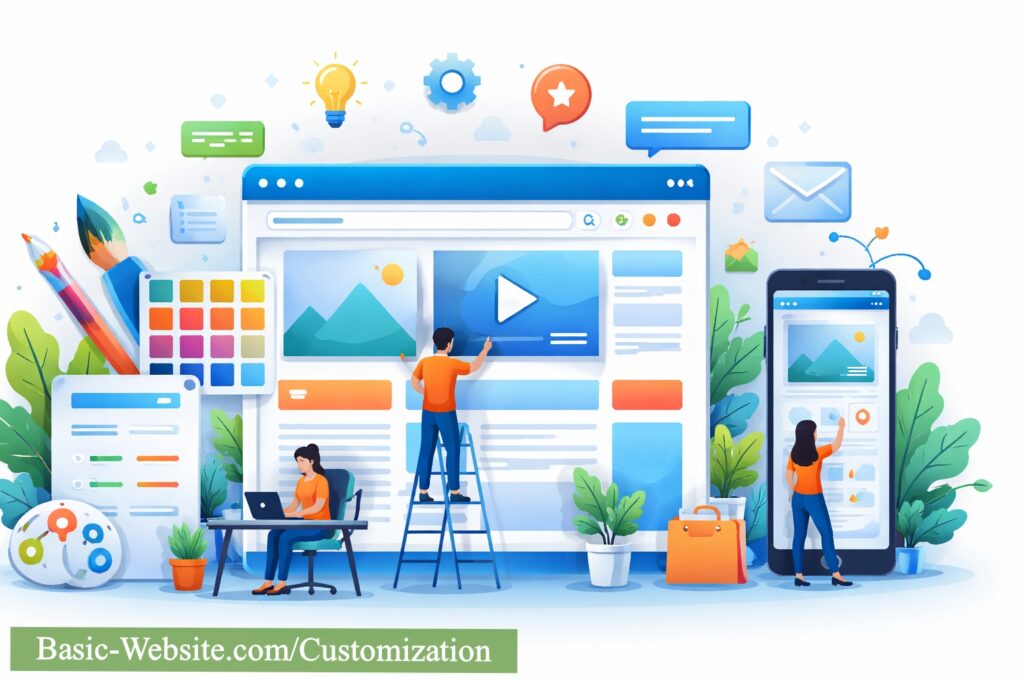
Website customization is the process of modifying a website’s design, content, and functionality to reflect a business’s unique brand and goals. Instead of using a generic template, customization allows owners to adjust colors, fonts, layouts, images, and features to create a professional and memorable online presence. Platforms like WordPress make customization accessible without advanced technical skills.
Website
A customized website improves user experience, builds trust, and supports conversions by aligning the site with visitor expectations. For businesses, entrepreneurs, and organizations, website customization transforms a basic website into a powerful tool for visibility, credibility, and long term growth online today and beyond.
WordPress
Website customization is the moment you stop accepting the bland, factory-issued internet and finally make your site look and behave like it actually belongs to you, not your hosting company’s lowest intern. It’s the shift from generic template to intentional presence, where your website starts reflecting identity instead of default settings.

In plain English, website customization means changing the design, layout, features, and content of a website to match your brand, goals, and visitors’ needs. It’s aligning visuals, structure, and functionality with purpose, so everything on the screen works together instead of feeling randomly assembled without thought or direction.

Because out of the box, every website looks like it was emotionally assembled by a depressed toaster. Default themes are safe, bland, and painfully neutral. They exist to offend no one and impress no one. If you never customize, your website blends perfectly into the vast ocean of forgettable digital wallpaper.

Design customization means changing colors, fonts, spacing, layout, and overall visual style so the site actually reflects your brand. It’s the difference between using a generic template and shaping something intentional. Instead of screaming “I gave up halfway,” your website communicates confidence, clarity, and consistency across every page.

Content customization is replacing demo text and stock images with your real information. Your bakery should not still say “Lorem Ipsum” in 2026. Real photos, real services, real messaging build credibility. Visitors want authenticity, not placeholder paragraphs copied from a theme’s imaginary landscaping business.

Feature customization involves adding or refining functions like contact forms, booking systems, online stores, galleries, and membership areas. Tools such as Elementor or Wix exist so normal humans can build useful features without crying over code. The goal is functionality that supports your business instead of limiting it.

User experience customization focuses on making the website easier and more pleasant to use. Faster loading times, clear navigation, and mobile friendliness are not luxuries. Visitors should not feel punished for showing up. A smooth experience keeps people engaged long enough to trust you.

Consider a simple comparison. A default website has generic blue colors, stock photos of fake smiling people, useless text, and zero personality. A customized website has your colors, your photos, your story, your services, and your voice. One attracts customers. The other attracts polite indifference.

Without customization, your website becomes forgettable, trust-destroying, emotionless, and ineffective. With customization, it becomes memorable, professional, trustworthy, and profitable. That transformation doesn’t happen automatically. It happens when you intentionally shape every element to serve a clear purpose and audience.

Customization is the difference between “some random website” and “this is the business I want to contact.” Launching a website is step one. Customizing it is when it actually starts working. Otherwise, you simply own a very expensive invisible brochure drifting quietly through the digital void.
Customization
Website customization is essential for turning a basic online presence into a strategic business tool that supports growth, trust, and engagement. By tailoring design, content, and functionality, businesses create a consistent brand experience that resonates with visitors and encourages action.
Activation
Platforms such as WordPress allow flexible customization without requiring advanced technical knowledge. A well customized website improves usability, strengthens credibility, and increases visibility in search results. In a competitive digital environment, customization is no longer optional. It is a practical step that helps businesses remain relevant, communicate clearly, and achieve lasting success online today and beyond now for everyone everywhere.